

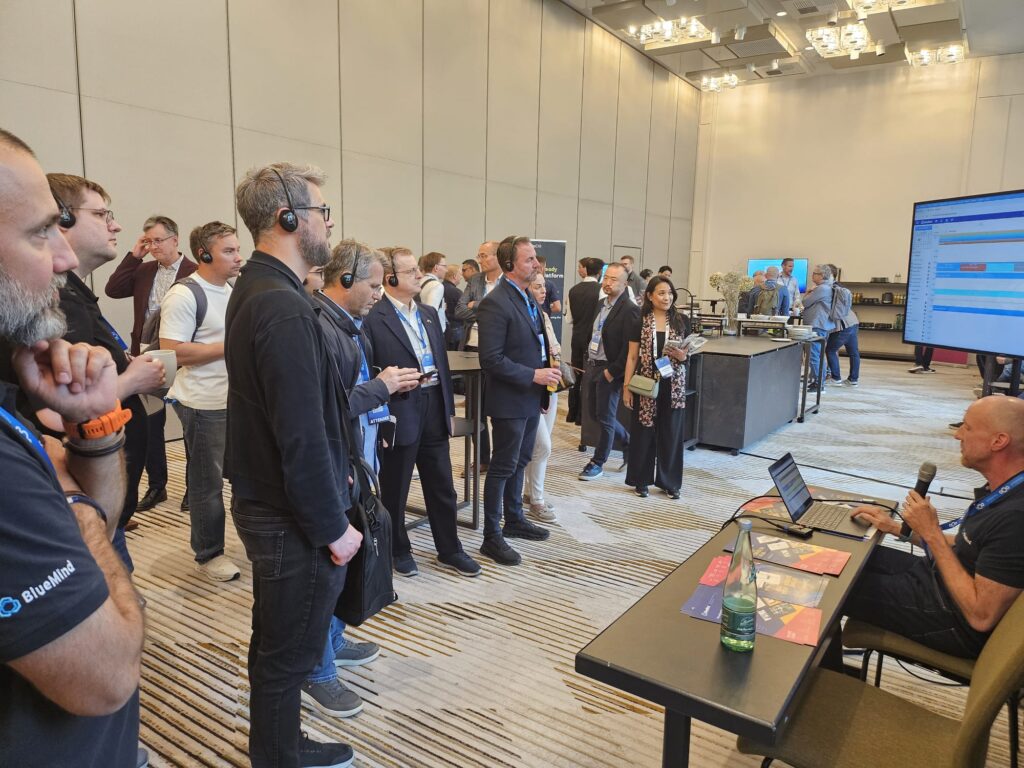
For several months now, BlueMind has been building strong momentum in Germany. From the events we attend and the conversations we have with local organizations to the new partnerships taking shape, all signs point in the same direction. The challenges BlueMind addresses are resonating strongly across the Rhine, where organizations are increasingly looking for ways to combine digital sovereignty with seamless user experience.
BlueMind: validated by partners, proven by the market
This growing momentum was clearly visible at the Nextcloud Summit 2026 in Munich. Throughout the two-day event, discussions focused heavily on digital sovereignty, open source, and the need for organizations to regain control over critical IT services. In this context, BlueMind drew significant attention from attendees seeking a practical and credible alternative to Exchange and Microsoft 365.
Many of the conversations revolved around the same questions: how can organizations move away from Microsoft solutions without disrupting established ways of working? How can they regain control over their IT environment without jeopardizing business processes that have been built and refined over the years? In Germany, as elsewhere, Outlook remains deeply embedded in daily operations. BlueMind’s native Outlook compatibility makes these migration projects significantly smoother and far less disruptive for users.
The momentum continues with our upcoming participation at NordBIT 2026. During the event, David Voisin, BlueMind’s representative in Germany, will speak about European alternatives to Exchange and explore how organizations can modernize their email and collaboration environment while maintaining full control over their data, budgets, and technological independence.
Growing demand for sovereign email solutions
Germany is part of a broader trend emerging across Europe. Organizations are increasingly looking for open, sovereign, and sustainable solutions that allow them to regain control over their digital infrastructure without forcing users to abandon the tools and workflows they rely on every day. The feedback we have received over recent months confirms that this approach is resonating strongly with the German market.